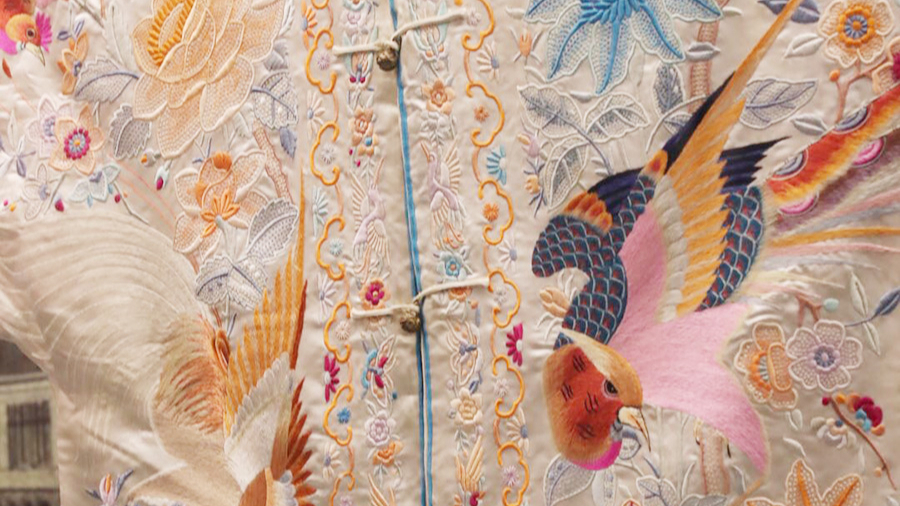
Yue Embroidery
Introduction
Yue embroidery, also known as Cantonese embroidery or Guang embroidery, is a renowned traditional art form originating from Guangdong province in southern China. It is one of the Four Famous Embroideries of China, which include Xiang embroidery from Hunan, Shu embroidery from Sichuan, and Su embroidery from Jiangsu. Yue embroidery is noted for its vivid colors and elaborate designs, often featuring motifs such as dragons, phoenixes, flowers, and birds. The art form has gained both national and international acclaim for its exquisite craftsmanship and artistic expression. Originating from cities such as Guangzhou, Shantou, Zhongshan, Panyu, and Shunde, Yue embroidery has evolved over centuries, reflecting the rich cultural heritage and artistic innovation of the region.
History
Yue embroidery has a long and storied history. The development of Yue embroidery was significantly influenced by the bustling Guangzhou Port during the Song Dynasty (960-1279), which facilitated the export of embroidered goods. This period marked the beginning of Yue embroidery’s international presence. During the Qing Dynasty (1644-1912), the craft saw further advancements with the establishment of industrial organizations in Guangzhou, attracting numerous craftsmen and leading to significant improvements in techniques. The use of animal hair during this era added new dimensions to the embroidery, enhancing its vividness. Yue embroidery gained further recognition in 1915 when it won awards at the Panama Expo, showcasing its global appeal and artistic excellence.
Techniques
Yue embroidery is characterized by its unique techniques, which involve intricate stitching, the use of vibrant colors, and the incorporation of various materials to create three-dimensional effects. The techniques have been refined over centuries, resulting in a distinctive style that combines traditional craftsmanship with artistic creativity.
Stitching Methods
The stitching methods in Yue embroidery are diverse, allowing artists to create detailed and lifelike images. Common stitching techniques include floss, thread, and gold-and-silk thread embroidery, which are employed to produce a range of effects from delicate shading to bold outlines. Each stitch is carefully chosen to enhance the texture and dimension of the design, making the images appear almost lifelike.
Tools and Materials
The tools and materials used in Yue embroidery are crucial to achieving its signature look. Traditional materials include silk, satin, and occasionally animal hair, which provide a lustrous base for the embroidery. The use of gold and silver threads adds richness and depth to the designs. Fine needles and wooden embroidery frames are essential tools, allowing for precision in the stitching process. The combination of these elements results in the creation of intricate and vibrant works of art that are both visually striking and technically accomplished.
Styles and Patterns
Yue embroidery is known for its diverse styles and patterns, which reflect the cultural and artistic influences of southern China. The designs are often inspired by traditional motifs such as dragons, phoenixes, flowers, and birds, which symbolize prosperity, peace, and harmony. The patterns are characterized by their strong, contrasting colors and intricate detailing, creating a visual impact that is both bold and elegant. Influenced by national folk art, Yue embroidery has developed a unique aesthetic that combines traditional Chinese elements with modern interpretations, resulting in a timeless appeal that continues to captivate audiences worldwide.
Cultural Significance
Yue embroidery holds significant cultural value, serving as a testament to the rich artistic heritage of Guangdong province. It represents not only the skill and creativity of the artisans but also the cultural exchanges facilitated by the historic Guangzhou Port. The art form has played a crucial role in the preservation and transmission of traditional Chinese culture, embodying the aesthetic principles and symbolic meanings inherent in Chinese art. As a cultural artifact, Yue embroidery is celebrated for its ability to convey stories and emotions through its vivid imagery and meticulous craftsmanship, making it a cherished part of China’s intangible cultural heritage.
Modern Applications
In contemporary times, Yue embroidery has found new applications and expressions, as artists seek to innovate and adapt the traditional craft to modern contexts. The art form has expanded beyond traditional garments and decorative pieces to include a wide range of products such as fashion accessories, home décor, and art installations. Modern artists are exploring new themes and techniques, incorporating elements from different artistic disciplines to create unique and expressive works. Exhibitions showcasing both vintage and modern pieces of Yue embroidery highlight the ongoing evolution of the craft, as it continues to resonate with audiences and maintain its relevance in today’s world.
Preservation Efforts
Efforts to preserve and promote Yue embroidery are ongoing, as enthusiasts and cultural organizations work to ensure the survival of this ancient art form. Initiatives include the establishment of research centers, training programs, and exhibitions that aim to educate the public and inspire a new generation of embroiderers. These efforts are crucial to maintaining the techniques, cultural significance, and artistic legacy of Yue embroidery, ensuring that it remains a vibrant and integral part of China’s cultural heritage for years to come.








